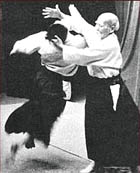
What is Wu-Wei (Nondoing)? Wu-Wei - translated nonaction, inaction or nondoing - is one of the most important Taoist concepts. As one of the features of the Tao - the creator and sustainer of everything in the Universe - wu-wei means its actionless, like in the following abstract from Tao-te ching:
The Tao in its regular course does nothing (for the sake of doing it), and so there is nothing which it does not do. (Legge, chapter 37)
Regarding the human behavior, nondoing refers to not forcing the things on their way, meaning action without effort or without aim. In the terms of Alan Watts, wu-wei is "what we mean by going with the grain, rolling with the punch..." (Tao: The Watercourse Way, Pantheon Books, 1973.)
In short, wu-wei is a pragmatic concept inspired by the Tao itself, that leads to a way of life proposed both to Taoist sages and rulers. Example of Wu-Wei Practice
There's a well known saying that approximate the wu-wei practice. In short, it says: It is better to wait for the tide to pull your boat to shore than to force yourself to pull it to shore. The first action is without effort as it is made by the tide therefore it is an example of acting without acting. Further Resources: A paper dealing with nondoing was published in our paperstore section. Click Nondoing and its connection with other basic Taoist concepts are
further explained in our courses designed for beginners: |